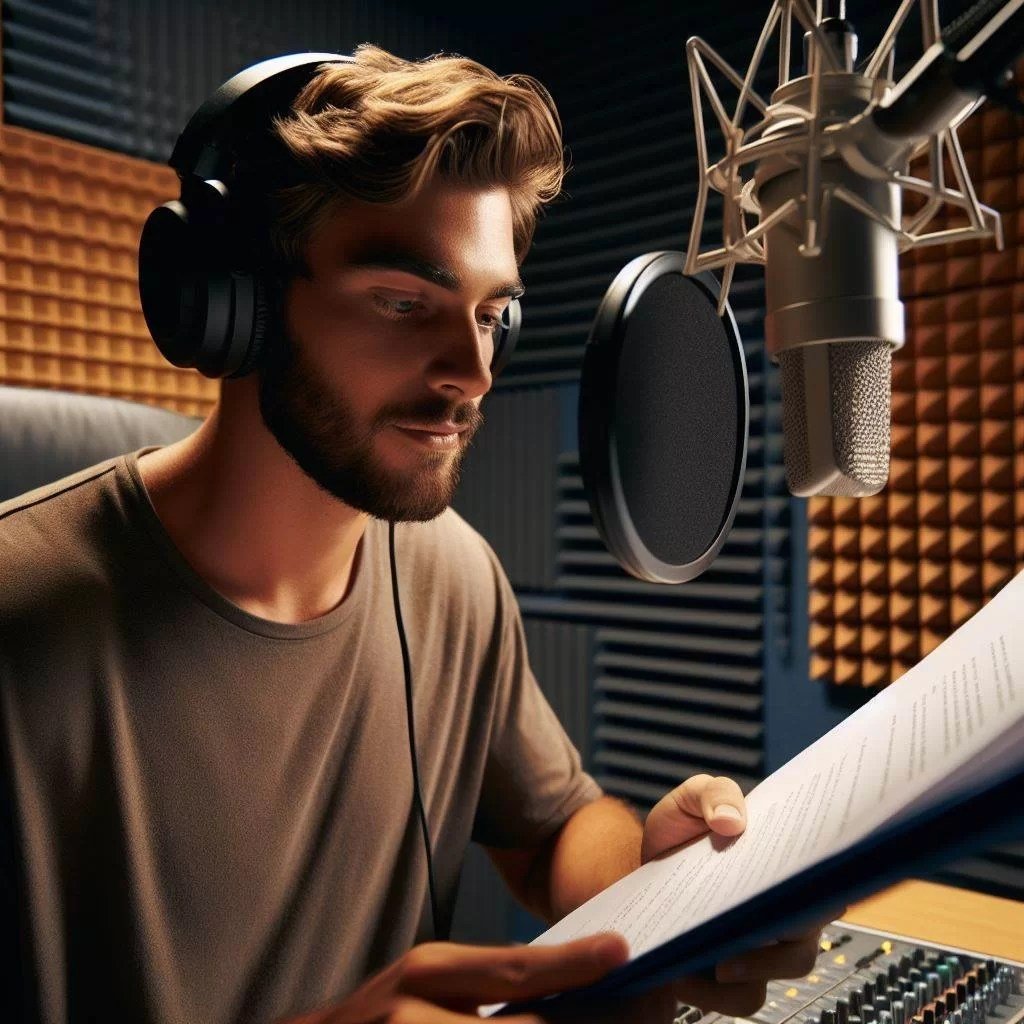
Ever found yourself captivated by a character’s voice, only to discover it belonged to an actor famous for an entirely different kind of role? The world of entertainment is full of such delightful twists, where live-action titans lend their vocal cords to animated heroes, villains, and even talking trees. These voice acting surprises from live-action stars don't just add a layer of celebrity caché; they often reveal a depth of talent and versatility you might never have expected.
It's a testament to the art of performance that some of the most memorable animated characters are brought to life by actors who, by choice or chance, shed their on-screen personas to simply become a voice. And, conversely, many beloved voice actors have quietly, or not so quietly, crossed over into the live-action realm, proving that a powerful voice is just one facet of their acting prowess.
At a Glance: Unpacking the Voices Behind the Faces
- Hidden Talents: Many A-list live-action actors have delivered iconic voice performances, often going unnoticed by casual viewers.
- Skill Over Stunt: While celebrity voice actors can be a gimmick, the best cases are driven by genuine vocal skill and character fit.
- Two-Way Street: The crossover isn't one-sided; many celebrated voice actors also have impressive live-action careers, sometimes even playing the same character.
- Demanding Art: Voice acting is a unique craft requiring immense vocal control, emotional range, and the ability to convey character without physical presence.
- Beyond Typecasting: Voice roles offer actors a chance to break free from their on-screen personas and explore new character types.
The Unexpected Resonance: Live-Action Stars Who Vanished into Voice Roles
It's easy to dismiss celebrity voice casting as a marketing ploy, a way to sell tickets or stream counts with a recognizable name. Yet, dig a little deeper, and you'll uncover instances where the choice was purely about talent, a director recognizing a specific timbre or cadence perfect for a character, regardless of the actor's fame. These are the moments when live-action stars truly disappear, their voices becoming inseparable from the animated beings they portray. You hear the character, not the movie star.
Let's explore some of the most remarkable instances where actors you know for their faces became unforgettable for their voices, often surprising audiences and critics alike.
Vin Diesel as The Iron Giant: More Than Just "I Am Groot"
Before he was the monosyllabic yet deeply emotional Groot in Guardians of the Galaxy, Vin Diesel lent his formidable vocal presence to another beloved gentle giant: the titular character in The Iron Giant (1999). It's a role that showcases Diesel's incredible ability to convey vulnerability, innocence, and immense power with just a few carefully modulated lines. His deep, resonant voice, imbued with a metallic echo, perfectly captured the alien robot's childlike wonder and eventual heroism. Diesel managed to sound both mechanical and profoundly human, creating a character whose simple pronouncements ("Superman...") resonated with surprising emotional depth, a far cry from the gravelly tough-guy roles he’d become known for.
Mark Hamill as The Joker: The Laugh That Defined a Villain
For many, Mark Hamill is the Joker. While forever etched in cinematic history as Luke Skywalker, Hamill found his true calling as the Clown Prince of Crime in Batman: The Animated Series. What makes his performance so astounding is not just its consistency across decades and countless iterations, but the sheer, unhinged glee he brings to the role. Hamill didn't just speak the lines; he inhabited the Joker with a terrifying glee, a manic energy that included an iconic, spine-chilling laugh that animators often referenced for physical cues. His background in live theatre and radio allowed him to craft a vocal performance that was both menacing and darkly comedic, setting the gold standard for every Joker portrayal that followed, live-action or otherwise.
Christian Bale as Howl: A Wizard's Charming Enthusiasm
Christian Bale, known for his intense, often brooding live-action roles (from Batman to Patrick Bateman), might seem an unlikely choice for the flamboyant, somewhat vain, yet ultimately charming wizard Howl in the English dub of Hayao Miyazaki's Howl's Moving Castle. However, Bale actively sought out a role in a Miyazaki film, a testament to his passion for the art form. His enthusiasm shines through, channeling a nuanced performance that perfectly captures Howl's mercurial nature, combining grandiosity with unexpected tenderness. It’s a remarkable example of an actor aligning his personal passion with a project, resulting in a voice performance that feels both natural and entirely transformative from his on-screen persona.
Diedrich Bader as Judah: The Calm Amidst the Chaos
Diedrich Bader is an actor with a significant live-action presence, often known for characters like the crass Lawrence in Office Space or Oswald Lee Harvey in The Drew Carey Show. His voice role as Judah, Princess Carolyn's incredibly calm, efficient, and unflappable assistant in Bojack Horseman, is a stark and delightful contrast. Bader imbues Judah with a soothing monotone, a voice of reason in a world of existential chaos. It's a subtle yet brilliant performance, highlighting how vocal restraint can be just as impactful as bombast. As Judah's role grew and his relationship with Princess Carolyn deepened, Bader’s consistent, unwavering vocal delivery became a comforting and often hilarious anchor in the show’s complex narrative.
Serena Williams as Ming: A Grand Slam Voice Cameo
Who knew one of the greatest athletes of all time was also a fan of animated epics? Tennis legend Serena Williams, a self-proclaimed devotee of Avatar: The Last Airbender, lent her voice to Ming, a prison guard in the show's third season. While a smaller role, Williams' presence was a genuine surprise and a testament to her love for the series. Her character, Ming, was notable for her kindness, leading Uncle Iroh to spare her life. It’s a fun example of a major celebrity stepping into a voice role purely for the joy of it, demonstrating that talent and passion can cross professional boundaries in unexpected ways.
Bradley Cooper as Rocket Raccoon: Burying the A-Lister for the Guardian
Bradley Cooper's explosive, cynical, yet deeply vulnerable performance as Rocket Raccoon in Guardians of the Galaxy is so utterly convincing that it's easy to forget a major Hollywood star is behind it. This is precisely the mark of an excellent voice actor: making the audience forget the person and only hear the character. Cooper buries his recognizable personality entirely within Rocket, delivering a performance brimming with energetic boisterousness and sharp-witted cynicism that is absolutely crucial to the Guardians' dynamic. His commitment to the character, even though he's exclusively voice-acting, is a masterclass in vocal performance, proving that true acting extends far beyond the physical.
James Woods as Hades: Fast-Talking, Charismatic Villainy
James Woods, an actor known for his intense, often intelligent and fast-paced live-action performances from the late 80s and early 90s, brought an entirely fresh take to the Disney villain Hades in Hercules. Instead of a typical menacing, booming voice, Woods offered a fast-talking, sarcastic, and almost sales-pitch-esque charisma to the Lord of the Underworld. His unique delivery made Hades less of a frightening monster and more of a perpetually annoyed, scheming, and hilarious businessman. This distinct, memorable portrayal was so beloved that Woods returned for multiple spin-offs, cementing Hades as one of Disney's most engaging and unexpectedly comedic villains, largely due to his iconic voice.
Ron Perlman as The Lich: The Voice of World-Ending Dread
Ron Perlman, instantly recognizable for his gruff, commanding presence in live-action roles like Hellboy, delivered one of the most terrifying voice performances in animated history as The Lich in Adventure Time. Despite Perlman reportedly not remembering the role (a testament to his extensive voice work!), his deep, guttural, and utterly chilling voice perfectly conveyed the ancient, world-ending threat of the undead villain. His slow, deliberate cadence and powerful resonance created a sense of inescapable dread, making The Lich one of the show's most impactful and genuinely frightening antagonists. It’s a powerful example of how a skilled actor can use their voice to evoke pure, existential horror.
Michael Cera as Brother Bear: A Precursor to Typecasting
Long before he became Hollywood's go-to awkward teen in live-action comedies like Superbad and Juno, Michael Cera started his voice acting career at age 15 as Brother Bear in the 2003 animated series The Berenstain Bears. His character was often portrayed as a socially inept pushover, a persona that would famously define his later on-screen roles. It’s fascinating to see this early voice work as an almost prophetic echo of the typecast character he would frequently play, suggesting that his unique vocal qualities and delivery were a match for this particular archetype from the very beginning of his career.
Orson Welles as Unicron: A Legendary Swan Song
The legendary director and actor Orson Welles, a giant of cinematic history, gave his final performance as the colossal, world-eating transformer Unicron in 1986's Transformers: The Movie. Despite being in terrible health at the time and reportedly having little affection for the film itself, Welles' deep, booming, and authoritative voice imbued Unicron with an immense, terrifying presence. It's an unusual, almost poetic footnote in his iconic career – a final, powerful vocal performance for a character of cosmic evil. The sheer gravitas and power in his voice elevated the character, making Unicron an unforgettable antagonist and a poignant, albeit unexpected, closing chapter for a cinematic legend.
The Silent Breakthrough: Voice Actors Stepping into the Spotlight
While it's often surprising to hear a famous face behind an animated voice, the journey from voice booth to live-action set is equally compelling. These actors, often celebrated within the animation community, leverage their incredible versatility and acting chops to bridge the gap, sometimes even bringing their animated characters to life in a new medium. It's a powerful demonstration that acting talent isn't confined to a single dimension, and that a compelling voice is often just one tool in a vast artistic toolkit.
Let's look at the voice actors who have made notable live-action breakthroughs, solidifying their status as multi-talented performers.
Matthew Lillard: From Shaggy's Voice to Shaggy's Face
Matthew Lillard is a fascinating case of an actor whose career effortlessly straddles both worlds. Long before he became the definitive voice of Shaggy in countless Scooby-Doo animated projects (taking over from Casey Kasem), Lillard was already a recognizable live-action star, known for his memorable roles like Stu Macher in Scream (1996). The ultimate crossover came when he portrayed Shaggy Rogers in the live-action Scooby-Doo films (2002 and 2004), bringing his established vocal performance directly to his on-screen character. It’s a testament to his unique energy and character embodiment that he could both voice and physically become such an iconic cartoon personality.
Katee Sackhoff: Bo-Katan's Voice and Form
Perhaps one of the most celebrated and seamless transitions from voice to live-action, Katee Sackhoff first brought the fierce Mandalorian warrior Bo-Katan Kryze to life in Star Wars: The Clone Wars and Star Wars Rebels. Her distinct vocal performance, conveying strength, pride, and vulnerability, made the character a fan favorite. Then, in a groundbreaking move, Sackhoff was cast to play Bo-Katan in live-action for The Mandalorian, making her one of the few actors to embody the same character across different mediums within the Star Wars universe. It’s a powerful validation of her talent and her deep understanding of the character she helped create through voice alone.
Megalyn Echikunwoke: Vixen's Animated and Live-Action Charms
Megalyn Echikunwoke had already made her mark as Mari McCabe, also known as Vixen, in the animated series of the same name within the Arrowverse. Her portrayal captured the character's strength and compassion. When it came time for Vixen to make her live-action debut in Arrow, Echikunwoke seamlessly stepped into the role. This direct translation from voice to live-action for the same character highlights the trust creators placed in her ability to embody Vixen fully, not just vocally, but physically, bringing a beloved animated hero into the flesh-and-blood world.
Freddie Prinze Jr.: From Rebel General to Romantic Lead
Freddie Prinze Jr. is widely recognized for his leading roles in 90s teen films like She’s All That (1999). However, he also delivered a nuanced and powerful voice performance as Kanan Jarrus, the charismatic Jedi Knight and leader in Star Wars Rebels. His voice acting for Kanan garnered critical acclaim, proving his dramatic range extended beyond his live-action romantic comedy fame. He even made a voice cameo in Star Wars: The Rise of Skywalker, demonstrating his continued connection to the Star Wars universe through his vocal talents. It’s a great example of an actor successfully maintaining a dual career path, excelling in both prominent live-action and voice roles.
Kevin Conroy: The Definitive Batman, On and Off-Screen
Kevin Conroy famously defined the voice of Batman for a generation in Batman: The Animated Series and continued to do so in the Batman: Arkham video games. His ability to switch between the gruff, authoritative Batman and the smooth, debonair Bruce Wayne set a benchmark for the character. While primarily known as a voice actor, Conroy made a rare and impactful live-action appearance as an older Bruce Wayne in the Arrowverse’s "Crisis on Infinite Earths" crossover event. This moment was deeply significant for fans, as it allowed the "voice of Batman" to finally inhabit the character in live-action, albeit a darker, alternate version, proving his mastery over the character regardless of the medium.
Zoë Kravitz: From Lego Catwoman to Gotham's Selina Kyle
Zoë Kravitz provided the voice for Catwoman in The Lego Batman Movie, bringing a playful, charismatic energy to the animated villainess. Her vocal performance showcased her ability to imbue characters with distinct personality. Fast forward a few years, and Kravitz delivered a captivating live-action portrayal of Selina Kyle/Catwoman in Matt Reeves’ The Batman (2022). This trajectory from voicing an iconic character in an animated parody to embodying her in a gritty live-action blockbuster underscores her versatility and her capacity to interpret complex roles across different stylistic demands.
Nancy Cartwright: Bart Simpson's Early Live-Action Roots
While Nancy Cartwright is indelibly linked to Bart Simpson and a host of other characters on The Simpsons, her early career actually included notable live-action roles. Before becoming a global phenomenon as the voice of a ten-year-old boy, Cartwright starred in the TV movie Marian Rose White (1982) and had a cameo in Twilight Zone: The Movie (1983). These early live-action ventures highlight that many successful voice actors hone their craft through traditional acting before finding their niche (or expanding it) in voiceover, proving that vocal talent often goes hand-in-hand with broader acting abilities.
Tara Strong: From Raven to "Pretty Hard Cases"
Tara Strong's voice acting résumé is incredibly extensive, featuring iconic roles like Raven in Teen Titans and Twilight Sparkle in My Little Pony. Her ability to portray a vast range of emotions and character types solely through her voice is legendary. While primarily a voice actress, Strong has also taken on live-action roles, appearing in the TV series Pretty Hard Cases (2021-2023) and earlier in Sabrina TV movies. Her transitions demonstrate that the expressive control needed for voice acting translates effectively to live-action, even if her face isn't as widely recognized as her voice.
Jon Heder: Napoleon's Voice and On-Screen Persona
Jon Heder shot to fame with his instantly recognizable, offbeat live-action portrayal of Napoleon in Napoleon Dynamite (2004). His distinct vocal delivery – a quiet, often sarcastic mumble – became intrinsically linked to the character's unique charm. This made him the natural choice to voice Napoleon in the subsequent animated series, effectively making his voice and on-screen persona inseparable. Heder’s case perfectly illustrates how a distinctive voice can become a signature, seamlessly translating between mediums and cementing a character's identity.
Casper Van Dien: Starship Troopers, Live and Animated
Casper Van Dien first captivated audiences as the earnest, heroic Johnny Rico in the live-action sci-fi cult classic Starship Troopers (1997). His portrayal cemented the character in pop culture. Years later, Van Dien reprised his role, but this time through voice, in animated features like Starship Troopers: Traitor of Mars and a related video game. This demonstrates a strong connection between the actor and the character, where the live-action performance laid the groundwork for his subsequent vocal contributions, reinforcing the continuity of Johnny Rico across different iterations.
Elijah Wood: Frodo's Voice in Middle-earth Games
Elijah Wood achieved global stardom as Frodo Baggins in The Lord of the Rings trilogy (2001-2003), his innocent yet resolute face becoming synonymous with the Hobbit hero. What might be less known is that Wood also lent his voice to Frodo in numerous The Lord of the Rings video games. While not a massive departure from his live-action role, it showcases how actors who define characters on screen are often called upon to continue that portrayal through voice, extending the character's legacy in interactive media. This is just one example of how many actors explore All about actors in so random within the diverse entertainment landscape.
Auliʻi Cravalho: From Moana's Singing Voice to Live-Action Drama
Auliʻi Cravalho burst onto the scene as the vibrant, powerful singing voice of Moana in Disney's Moana (2016) at a remarkably young age. Her incredible vocal talent and emotive delivery made the character an instant classic. Following this voice acting triumph, Cravalho smoothly transitioned into live-action, making her debut starring as Lilette Suarez in the NBC drama series Rise (2018). Her success demonstrates that a captivating vocal performance often indicates a broader acting talent, capable of carrying both animated musicals and dramatic live-action roles.
Andrew Rannells: From Anime Dubs to "Girls" Breakthrough
Andrew Rannells has a robust background in voice acting, particularly in anime dubs and as the lead in Archie’s Weird Mysteries. This foundation in vocal performance allowed him to hone his expressive range. He then achieved significant live-action fame as the openly gay character Elijah Krantz in Lena Dunham's acclaimed HBO series Girls (2012-2017). Rannells’ journey showcases how specialized voice work can serve as a potent training ground, equipping actors with the skills to deliver compelling performances across various acting mediums and genres.
Seth MacFarlane: The Voice Behind the Empire, and a Western Star
Seth MacFarlane is a household name in animation, having created and voiced a multitude of iconic characters, most notably Peter Griffin, Brian Griffin, and Stewie Griffin in Family Guy. His unparalleled vocal versatility and comedic timing are the backbone of his animated empire. Yet, MacFarlane has also proven his mettle in front of the camera, taking the lead role in the live-action film A Million Ways to Die in the West (2014), which he also directed. His ability to switch between being a vocal chameleon and a visible leading man highlights his multifaceted talent and creative control.
Hank Azaria: The Simpsons' Many Voices, and a Dramatic Actor
Hank Azaria is a vocal wizard, known for voicing an astonishing array of characters on The Simpsons, including Moe Szyslak, Chief Wiggum, Apu Nahasapeemapetilon, and many more. His ability to create distinct, recognizable voices for dozens of characters is legendary. Parallel to this, Azaria has maintained a strong live-action career, with memorable roles in films like The Birdcage (1996) and critically acclaimed television series such as Ray Donovan (2013-2020), as well as earlier roles like Herman’s Head (1991-1994). His career is a prime example of an actor who seamlessly excels in both the unseen world of voice acting and the visible realm of live-action, demonstrating remarkable range and adaptability.
Beyond the Microphone: Why the Crossover Matters
The seamless transitions between voice acting and live-action aren't just fascinating anecdotes; they underscore several critical truths about the entertainment industry and the nature of acting itself.
The True Measure of Talent
While celebrity voice actors sometimes face criticism for being chosen purely for their name recognition, the examples above demonstrate that, more often than not, these "surprises" are rooted in genuine talent. Directors and casting agents seek specific vocal qualities, emotional depth, and a knack for characterization that transcends physical appearance. Vin Diesel wasn't cast as Groot because he's Vin Diesel; he was cast because his voice could convey profound emotion through limited dialogue. Mark Hamill became the Joker not because he was Luke Skywalker, but because he became the Joker in the booth. These roles are secured not by fame, but by skill.
The Freedom of Anonymity and Range
For many live-action stars, voice acting offers a unique freedom. They can shed the constraints of their physical appearance, break free from typecasting, and explore characters that their on-screen persona might never allow. Christian Bale could be the charming, somewhat vain Howl, a world away from his intense Batman. Michael Cera could develop his awkward persona without being physically present. This anonymity allows for incredible artistic liberation, opening up new avenues for creative expression and stretching an actor's range in unexpected directions.
Conversely, for voice actors venturing into live-action, it's an opportunity to showcase that their acting prowess isn't limited to their larynx. It proves they possess the full spectrum of acting skills – physical comedy, dramatic presence, emotional nuance – that translate across mediums. Actors like Katee Sackhoff and Kevin Conroy bringing their animated characters to live-action are not just fan service; they are powerful affirmations of their complete mastery of those roles.
The Blurring Lines of Performance
In an increasingly multi-platform entertainment landscape, the distinction between "live-action actor" and "voice actor" is becoming less rigid. Many contemporary actors train in both, or find themselves moving between the two disciplines as opportunities arise. This fluidity highlights a fundamental truth: acting is acting. Whether you're using your whole body on a stage, your face on a screen, or just your voice in a booth, the core principles of character development, emotional truth, and storytelling remain the same. The crossover phenomena we see today are simply a reflection of this evolving understanding of performance.
The Art of Disguise: How Stars Vanish into Voice Roles
So, what does it take for a recognizable live-action star to effectively "disappear" into a voice role? It's far more than just reading lines. It's a specialized craft that demands unique skills and an immense commitment to vocal performance.
Mastering Vocal Range and Technique
Voice actors are vocal athletes. They must possess incredible control over pitch, tone, cadence, and texture. Think of Ron Perlman's guttural growl as The Lich or James Woods' rapid-fire patter as Hades. These aren't just natural voices; they are carefully crafted performances that utilize the full spectrum of an actor's vocal instrument. They involve breathing techniques, vocal warm-ups, and an understanding of how to sustain challenging vocalizations without strain.
Physicality in the Booth
Ironically, voice acting is often highly physical. Actors use their bodies to inform their voices, bringing movement, gestures, and facial expressions into the booth to help convey emotion and energy. Mark Hamill famously used his entire body to articulate the Joker's maniacal laughter and twisted personality. Bradley Cooper likely moved quite a bit to capture Rocket Raccoon's frenetic energy. This "physicality of the voice" allows for a more authentic and dynamic performance, even when the audience only hears the end result.
Character Study Without Visual Cues
For voice actors, the character isn't just a voice; it's a fully realized being. They delve into motivations, backstories, and emotional arcs, just as they would for a live-action role. The challenge is to convey all of that complexity without the benefit of facial expressions, body language, or costume. Every sigh, every grunt, every nuanced pronunciation must carry the weight of the character's internal world. This demands a deep understanding of the character and an ability to translate that understanding purely through sound.
Common Misconceptions About Voice Acting
Despite its growing recognition, voice acting still battles some pervasive misconceptions. Let's set the record straight.
Misconception 1: "It's Just Reading Lines"
Reality: This couldn't be further from the truth. Voice acting is a rigorous, demanding art form that requires extensive training in vocal technique, improvisation, character development, and often, singing. It's an entire performance contained within the voice, often requiring multiple takes to perfect a single sound or line delivery.
Misconception 2: "Anyone Can Do It If They Have a Unique Voice"
Reality: While a distinctive voice can be an asset, it's the ability to act with that voice that truly matters. Many successful voice actors have relatively "normal" voices but possess extraordinary control, range, and interpretive skills. It's about bringing a character to life, not just having a cool sound.
Misconception 3: "Celebrity Voice Actors Are Always a Gimmick"
Reality: As we've seen, while some celebrity castings are undoubtedly for marketing, many are chosen for their genuine talent and unique vocal contributions that perfectly fit the character. When it works, like with James Woods' Hades or Vin Diesel's Iron Giant, the actor's skill elevates the material, transcending their fame. The best voice directors prioritize performance above all else.
The Next Chapter: Continuing to Discover the Voices Among Us
The surprising crossovers between live-action and voice acting will undoubtedly continue to captivate and delight audiences. As storytelling methods evolve and technology advances, the opportunities for actors to explore new mediums and embody characters in innovative ways will only grow. Whether it's an actor known for their face disappearing entirely into an animated persona, or a beloved voice bringing a cherished character to life in three dimensions, these shifts remind us of the boundless nature of performance.
The next time you're watching an animated series or film, or even playing a video game, take a moment to really listen. You might just be surprised by the familiar, yet completely transformed, voice you hear. And who knows, that voice might be paving the way for its owner's next big live-action role, or vice-versa. The world of acting is a vibrant, interconnected tapestry, and these surprising vocal journeys are just another thread in its rich design.